A high squeal when you first stop
Many pads carry a small metal tab that squeals once the friction material is thin. It is an early warning, not an emergency, but it should not be ignored for months.
Safety items first, the rest on your schedule · (720) 303-4784

Stopping power
Grinding, squealing or a pedal that sinks lower than it used to? Have the brakes looked at free and hear exactly which parts are worn before you pay for any of them.
Get the brakes checked — (720) 303-4784Brakes rarely fail without warning. They tell you, usually through sound or pedal feel, well before the parts are dangerous.
Many pads carry a small metal tab that squeals once the friction material is thin. It is an early warning, not an emergency, but it should not be ignored for months.
Metal on metal. The pad is gone and the backing plate is cutting into the rotor. Every mile now adds to the bill.
Air in the lines, a leak or worn fluid can all do this. It needs a look before the next long downhill.
Often a caliper that sticks or a hose that collapses inside, so one wheel brakes harder than the other.
Usually uneven rotor surfaces. Heavy braking on long descents makes it more common.
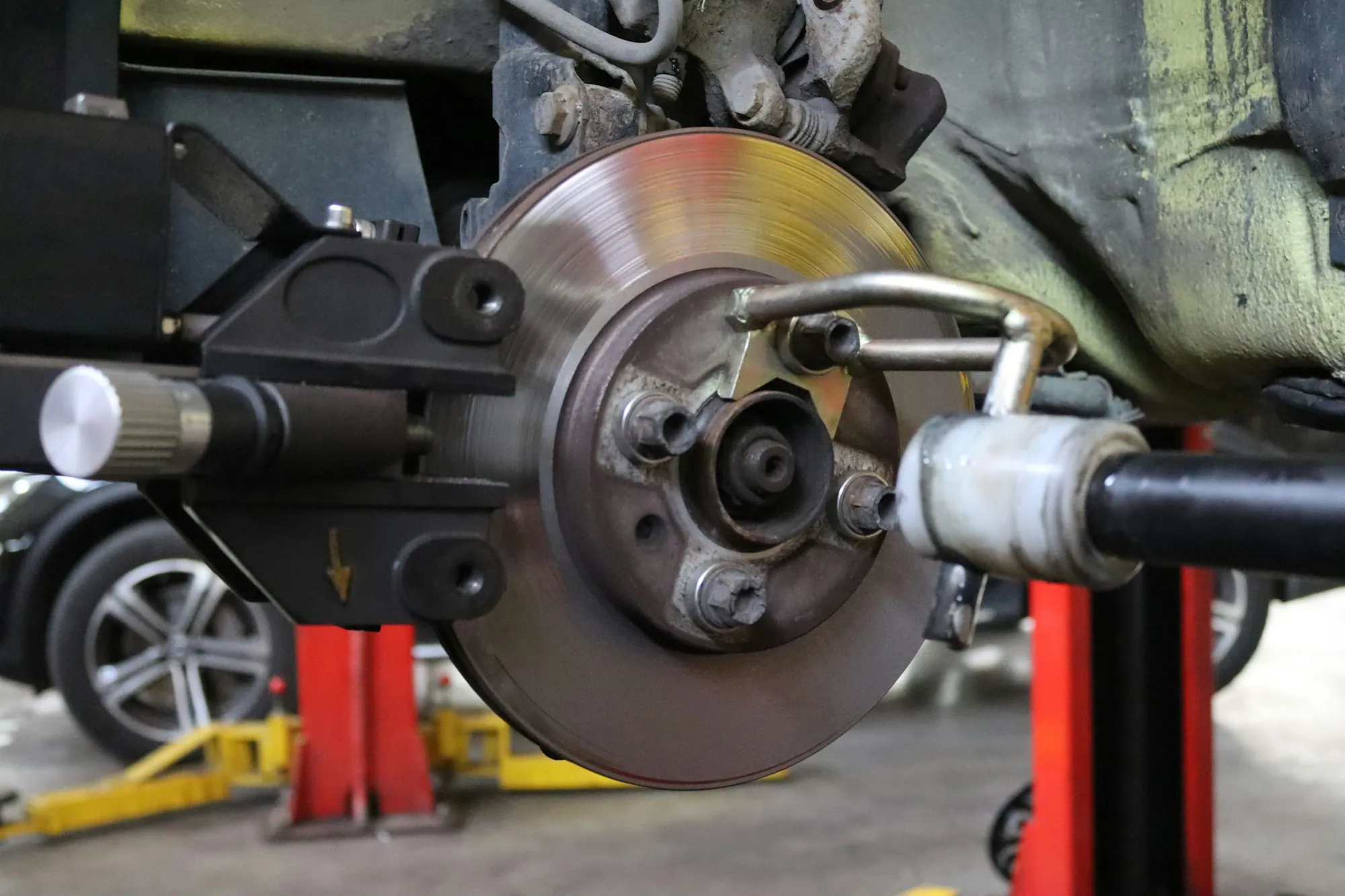
A brake job starts with measuring, not guessing. Pad thickness is checked at every wheel, rotors are measured for thickness and run-out, calipers are checked for sticking pins and leaking seals, and the hoses and lines are inspected along their length. The fluid is tested for moisture, which lowers its boiling point and makes the pedal fade on long grades.
You then get a clear breakdown: which axle needs work, whether the rotors can stay, and whether anything else is close to the limit. Pads alone is the cheapest outcome, and catching wear early is how you stay there.
After the repair the pads are bedded in on a road test, so they grip evenly from the first week rather than glazing.
Tell us which wheel the noise seems to come from, whether it happens on every stop or only the first few, and whether the pedal feel has changed. Mention any long downhill drives coming up; that helps us judge how soon the work matters.
It depends on how thin the pads are, and that is the reason to have them measured. Some have a few thousand miles left; some are nearly at the backing plate. Driving until it grinds almost always turns a pad job into a rotor job.
No. If they are above minimum thickness and the surface is even, they can often stay. We measure them and tell you which applies, rather than replacing them by habit.
Long descents heat pads and rotors fast. A strong smell or smoke means the brakes are being overworked, often from riding the pedal. Lower gears help. If the smell happens on short trips too, a caliper may be dragging, and that needs a look.
The inspection is free and the price comes before the work.